Understanding the Air Blast Freezing Process and Tunnel Freezers
Understanding the Air Blast Freezing Process and Tunnel Freezers
Air blast freezing is a rapid freezing technique that uses extremely cold air to freeze food quickly. Unlike traditional freezing methods, which form large ice crystals that can damage the food's cellular structure, air blast freezing creates tiny ice crystals that preserve the food’s texture, nutritional value, and flavor. This rapid process helps maintain the food's quality by preventing cellular damage caused by the larger ice crystals formed in slower freezing methods.
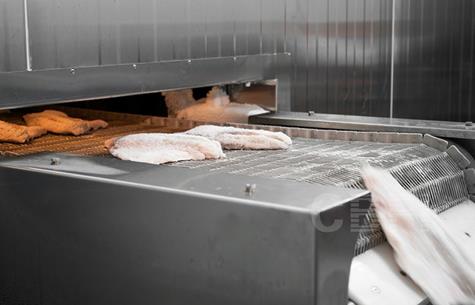
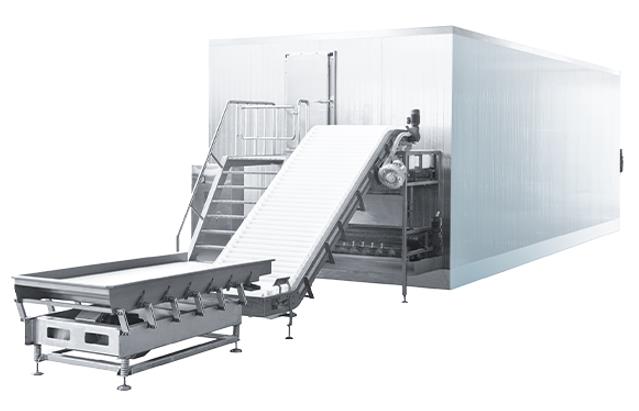
A common equipment used for air blast freezing is the freezing tunnel. This device works by moving food through a continuous conveyor belt that passes through a cooling tunnel. Inside, refrigerants lower the air temperature, quickly freezing the food. This method ensures that food rapidly reaches the necessary freezing temperature, preserving its structure and nutritional integrity.
Common Applications of Tunnel Freezers
Tunnel freezers are used extensively in the food industry for rapid freezing of various products, especially those that need to retain their shape, texture, and nutrients. These freezers are ideal for freezing fruits, vegetables, meat, seafood, and dairy products. Examples include asparagus, strawberries, broccoli, beef, shrimp, fish fillets, and portioned meats. Tunnel freezing ensures that food stays fresh and retains its original quality, even after freezing.
One of the biggest advantages of tunnel freezers is their ability to freeze large volumes of food in a short time, making them perfect for high-efficiency production lines. The fast freezing process also helps prevent the growth of bacteria and extends the shelf life of the food. With strong airflow, tunnel freezers ensure that each food item is exposed to cold air evenly, avoiding problems like uneven freezing or freezer burn that can occur with traditional freezing methods.
Key Features of Tunnel Freezers
- Eco-friendly: Tunnel freezers use green refrigerants and energy-efficient compressors, adhering to modern environmental standards.
- High-efficiency mesh belt design: The shock mesh belt helps evenly distribute cold air over the food, ensuring efficient freezing and preventing uneven freezing.
- Optimized air duct system: The tunnel’s air ducts are carefully designed to provide stable and even airflow, ensuring that all food is uniformly frozen while preserving quality.
- Vibration system: To prevent clogging and ice buildup, tunnel freezers include a vibration mechanism that maintains smooth airflow and prevents food from sticking together.
- Energy efficiency: These freezers are designed to optimize energy use, reducing operational costs for manufacturers and improving profitability.
Tunnel freezers are advanced, energy-efficient machines that play a crucial role in modern food processing. They offer high performance while being environmentally conscious, improving the freezing process and reducing energy consumption. As technology continues to improve, the range of applications for tunnel freezers grows, making them indispensable in maintaining the quality and nutritional value of frozen products. Through careful engineering, tunnel freezers optimize production efficiency and ensure the best possible frozen food quality.
Quick Freezer Speed: How Much Can They Freeze per Hour?
How to Estimate the Cost of Purchasing a Quick Freezer
Related Article