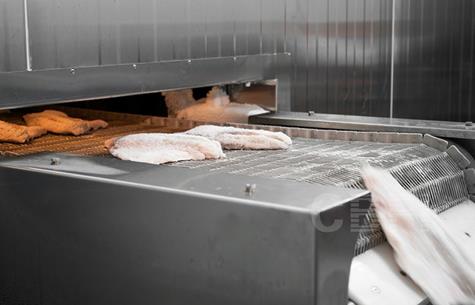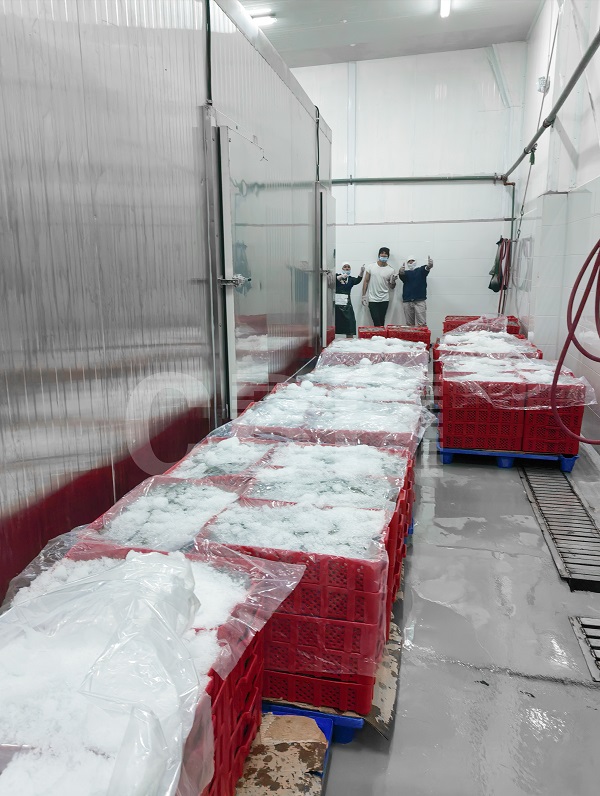
Discover the advantages of brine freezers in food processing for rapid freezing, energy efficiency, and superior food preservation.
What is a Brine Freezer?
In the modern food processing industry, rapid freezing technology is key to ensuring food quality and extending shelf life. Among these technologies, the brine freezer has become the preferred choice for many food processing companies due to its unique freezing efficiency and wide range of applications.

So, what exactly is a brine freezer?
1. Principle of Operation of a Brine Freezer:
The core of the brine freezer lies in using brine as the refrigerant. The principle is based on the property of brine solutions to lower their freezing point. Through the refrigeration system, the brine is cooled to extremely low temperatures (usually between -10°C and -20°C). The low-temperature brine is then pumped into the freezing chamber, where it directly contacts or surrounds the food to be frozen.
The high thermal conductivity of brine allows heat to be transferred rapidly from the food, enabling quick freezing. This process significantly shortens the time spent in the "ice crystal formation zone," reducing cell damage and preserving the food's original flavor and nutritional value.
2. Technical Advantages:

- Rapid Freezing: The brine freezer can quickly lower the temperature of food, ensuring the formation of small ice crystals that reduce damage to the food's cellular structure and preserve its texture and freshness.
- High Efficiency: Compared to traditional air freezing, the high thermal conductivity of brine increases the freezing rate, making it suitable for large-scale continuous production, improving production efficiency.
- Cost-Effectiveness: Although the initial investment is relatively high, over the long term, the brine freezer demonstrates good economic benefits due to its high freezing capacity and low energy consumption in large-scale production.
- Wide Applications: From seafood to fruits and vegetables, as well as various ready-to-eat foods, the brine freezer is highly adaptable and can meet the freezing needs of different types of food.
3. Challenges and Improvement Directions:
Despite its clear advantages, the brine freezer faces challenges such as maintenance costs and equipment corrosion. CBFI is committed to technological innovation, optimizing brine formulations, using corrosion-resistant materials, and incorporating intelligent monitoring systems to address these challenges, ensuring long-term stable operation of the equipment.

4. Future Prospects:
As technology continues to advance, brine freezers are evolving towards higher efficiency, better environmental sustainability, and more intelligent designs. CBFI continues to monitor industry trends, exploring alternatives to low-temperature refrigerants to reduce environmental impact while enhancing automation and precise control of the freezing process to meet the high standards of the future food industry.
Factors Influencing the Cost of Frozen Dumpling Production Lines
Dual spiral quick freezers offer efficient, space-saving solutions for fast freezing of various foods, enhancing production and quality.
Related Article