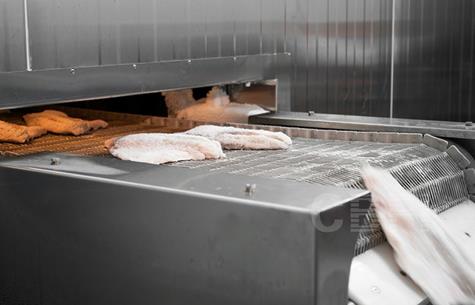
Quick Freezer Speed: How Much Can They Freeze per Hour?
Understanding the Freezing Speed of Quick Freezers: How Much Can They Freeze per Hour?
Quick freezers are essential in numerous industries such as food processing, pharmaceuticals, and scientific research. Their advanced freezing technology ensures the freshness of food, maintains the potency of medications, and safeguards the integrity of scientific samples.

When discussing the “freezing speed” of a quick freezer, we’re referring to how much material the machine can freeze within a specific period. However, this is not just a simple figure; it involves several factors, including the machine's technology, efficiency, and the intended application.
1. How Quick Freezers Work and What Affects Their Speed
To fully understand freezing speed, we first need to look at how quick freezers operate.
Quick freezers work by rapidly lowering the temperature of items, bringing them below freezing within a short time. This method effectively slows microbial activity and chemical reactions, making long-term storage possible.
The speed at which a quick freezer works is influenced by several factors, such as the cooling system’s capability, the size of the freezing chamber, and the initial temperature of the items being frozen.

2. Key Factors That Affect Freezing Speed
- Cooling System: A more advanced refrigeration system can remove heat more efficiently, speeding up the freezing process.
- Freezer Design: A well-structured chamber and effective heat exchange mechanisms help cold air circulate evenly, accelerating the freezing time.
- Item Properties: The size, material, and thickness of items directly influence how quickly they freeze due to differences in their thermal conductivity.
- Pre-freezing Temperature: The initial temperature of the items before they’re placed in the freezer also affects how efficiently they freeze.

3. How to Measure the Freezing Speed of a Quick Freezer
While it’s easy to focus on how many kilograms a quick freezer can freeze per hour, evaluating its overall performance is more complex.
Factors such as freezing uniformity, energy efficiency, and the preservation of item quality during freezing are also important to consider.
The most efficient quick freezers strike a balance, completing the freezing process quickly while ensuring the quality of the items remains intact. This combination of “speed and quality” is crucial for optimal results.

4. The Role of Freezing Speed in Real-World Applications
In the food processing industry, freezing speed is directly tied to production efficiency and cost. A quick freezer that can uniformly freeze large quantities of food quickly is essential for maintaining freshness and extending shelf life.
In pharmaceuticals, the speed and stability of quick freezers are critical for ensuring the effectiveness of vaccines, biological samples, and other temperature-sensitive products during storage and transportation.
In conclusion, freezing speed is a multifaceted consideration that involves more than just how fast the machine can freeze materials. It encompasses the technology, design, and specific needs of the application.
When selecting a quick freezer, it’s important to consider not only the freezing speed but also how well it preserves the items and its overall efficiency. This ensures that your specific needs are met with precision and reliability.
Is Operating a Quick Freezer Difficult? Learn the Process and Tips
Understanding the Air Blast Freezing Process and Tunnel Freezers
Related Article